
What’s the best material for kitchen knife handles?
What’s the best material for kitchen knife handles?
Choosing the best material for kitchen knife handles is one of the most important decisions when selecting kitchen knives for retail or wholesale. The handle determines comfort, safety, durability, and user experience. For businesses working with a Kitchen knife manufacturer or sourcing from an OEM kitchen knife factory, understanding which handle materials perform best can directly influence sales and customer satisfaction.
Knife handle materials vary widely in texture, weight, and performance. Some are designed for aesthetics, while others prioritize grip or long‑term durability. Knowing the differences helps sellers choose the right products and stay competitive in the global kitchen knife market.
Why Handle Material Matters for Kitchen Knives
The handle is the part of the knife users touch the most, so its quality directly impacts safety and efficiency. A high‑quality handle ensures a solid grip even when wet, maintains balance, and prevents hand fatigue. As more consumers look for high‑performance kitchen tools, the choice of handle material has become a major selling point for distributors and brands.
Working closely with a reputable Kitchen knife manufacturer allows businesses to select the most suitable materials for their target market. For brands building private‑label products, an OEM kitchen knife factory can produce customized handle styles, shapes, and materials to match market trends.
Most Popular Kitchen Knife Handle Materials
Different materials offer different benefits. Below are the most widely used and most market‑proven handle materials in today’s knife industry.
Wooden Handles
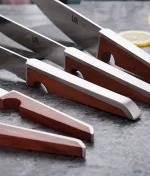
Wooden handles remain one of the most classic and premium options. High‑quality hardwoods such as pakkawood, rosewood, walnut, and ebony provide excellent grip and a warm, natural feel. They are often used in Japanese‑style knives and high‑end collections. Consumers who value craftsmanship and aesthetics tend to prefer wooden handles.
Wood handles work very well for brands that source from a skilled Kitchen knife manufacturer, especially when they want a premium product line. OEM factories can customize grain, color, and finish to create unique, branded knife collections.
Stainless Steel Handles
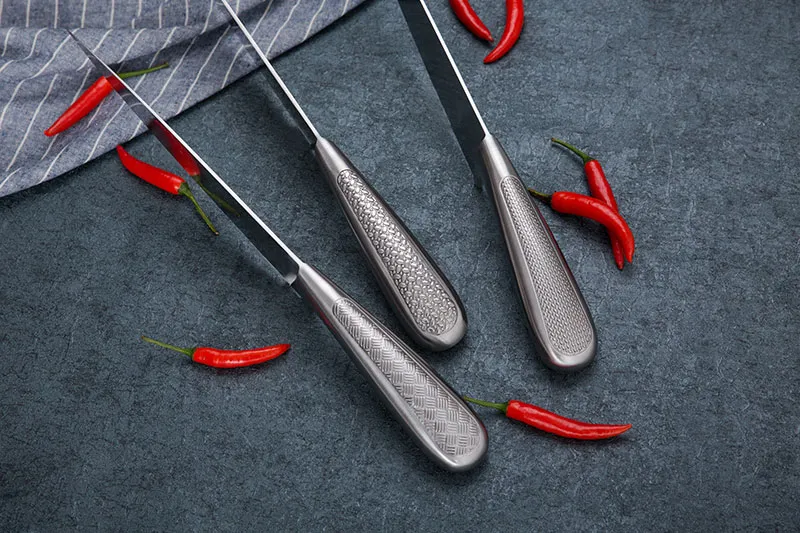
Stainless steel handles offer exceptional strength and lifespan. They are easy to clean, unlikely to crack, and ideal for professional kitchens where durability is critical. Many modern, minimalist knife designs use stainless steel because it creates a sleek, seamless appearance.
These handles are highly customizable when working with an OEM kitchen knife factory, allowing brands to design textured patterns, engravings, or anti‑slip features.
Plastic and PP Handles
Plastic and polypropylene (PP) handles are highly cost‑effective and extremely resistant to moisture. They are popular in household knife sets and commercial environments where hygiene and affordability matter most.
Many large‑scale wholesalers source plastic‑handled knives from a Kitchen knife manufacturer because they offer high volume, low cost, and stable quality.
G10 Handles
G10 is a fiberglass laminate known for its superior durability, water resistance, and ergonomic comfort. It is commonly found in high‑performance knives and tactical tools.
More retailers are requesting G10 handles from OEM kitchen knife factory partners due to its modern appearance and excellent grip.
Micarta Handles
Micarta is another high‑end handle material made from layers of linen or paper bonded with resin. It is extremely tough, offers an excellent grip, and has a handcrafted appearance.
This material appeals to premium buyers and is often requested by brands who work with custom‑focused knife manufacturers.
Which Handle Material Is Best for Your Market?
The “best” handle material depends on your customers:
- Budget buyers → Plastic / PP
- Professional chefs → G10, stainless steel, Micarta
- Home cooks → Wooden handles, PP handles
- Premium collectors → Micarta, exotic hardwoods
- Restaurant kitchens → Stainless steel, PP
When working with a strong Kitchen knife manufacturer, you can choose materials that match your buyers’ needs. If you want your own brand, an OEM kitchen knife factory can help you create custom handle colors, shapes, and textures.
Conclusion: Which Handle Material Should You Choose?
There is no single “best” handle material—each serves different user needs. Wooden handles offer beauty and tradition, stainless steel provides durability, PP offers affordability, G10 ensures high performance, and Micarta delivers luxury.
The key is choosing a supplier who understands these materials and can produce knives that meet market expectations. Partnering with a professional Kitchen knife manufacturer or OEM kitchen knife factory allows you to create a product line that fits your exact target audience and brand positioning.
Selecting the right handle materials not only improves product quality but also boosts sales and strengthens your brand’s competitive advantage.

Related Posts